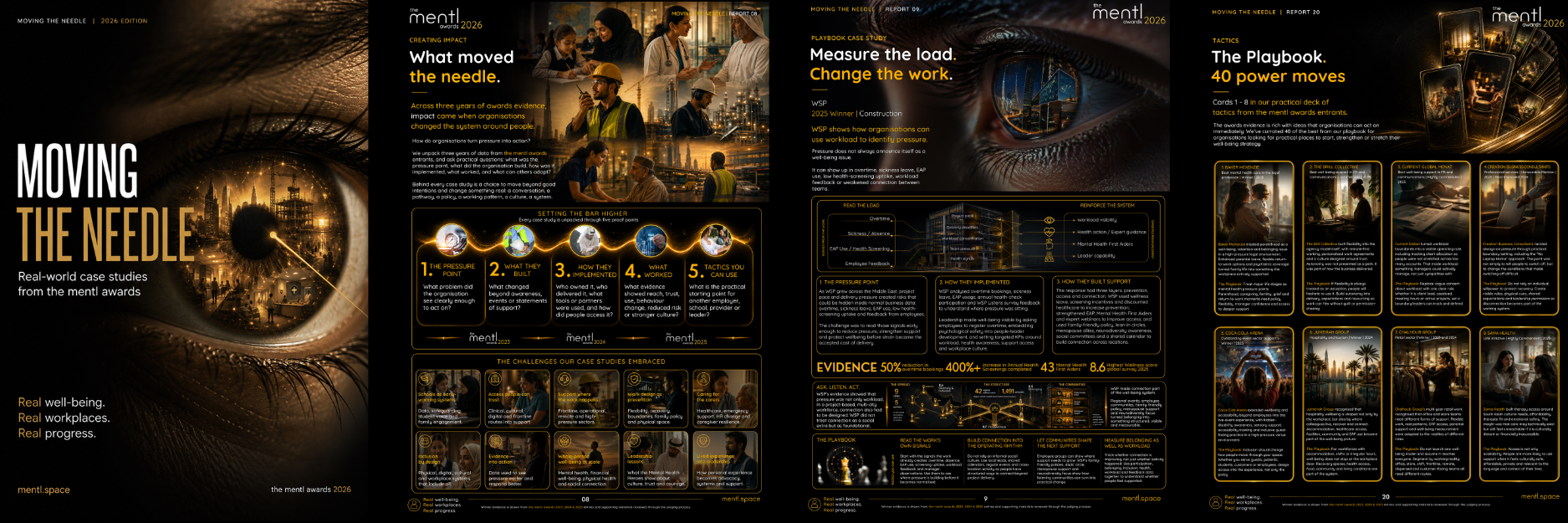
Moving the Needle – a real world playbook from the mentl awards
This is not a white paper
It is a playbook built from three years of mentl awards entries, winner submissions, finalist stories and judging evidence.
Its purpose is simple: to surface practical ways organisations can lean into well-being to create:
Community. Impact. Resilience.
That is the theme of the mentl awards 2026. It is also why this work feels more relevant than ever.
Across the GCC, pressure is rising: workload, burnout, loneliness, family strain, leadership fatigue, frontline risk and the need for support people can actually see, trust and use.
But when you step back, another picture appears. Real progress is being built, across sectors, by people who are not waiting for perfect conditions to start.
This first annual edition of Moving the Needle brings that work together: data-rich deep dives into nine industry leaders, a wider tactics deck spanning multiple sectors, and more than 60 real-world case studies and examples from the GCC region.


The aim of this playbook is to show what moved the needle: what the pressure point was, what was built, how it was implemented, what changed, and what others can adapt.
Entries for the mentl awards 2026 are now open, including a new wider invitation for MENA entries and the Year of the Family category.
This is Edition 1, and it will keep evolving in the run-up to the awards in November.
We will continue unpacking finalist stories through updates, case studies and our new Moving the Needle YouTube live podcasts, as the mentl platform crosses 100,000 subscribers.
If you are ready to add your story to this growing playbook visit mentlawards.com to learn more about entry.
“Preparing this playbook has been humbling.
“Only when you stand back and look at the work together do you realise how much is already being done. I hope you find these case studies as powerful as I did.”
Scott Armstrong, founder, mentl
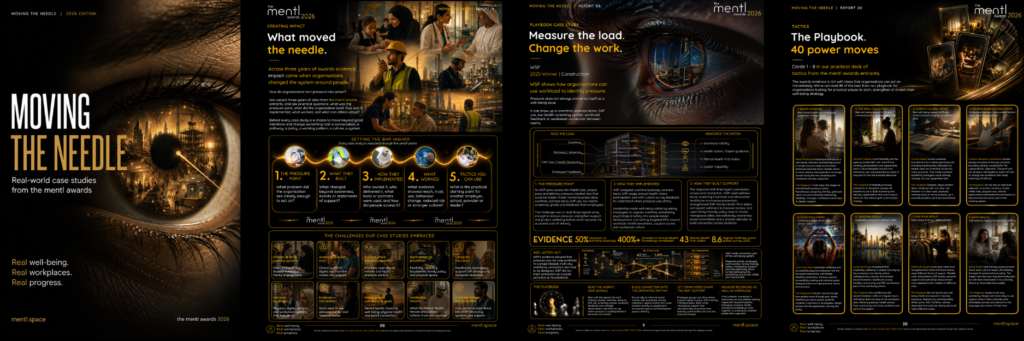
Our full playbook is available to mentl community members, click the cover shot to sign up for free to receive your copy.
global trends
The outlook is improving. Engagement is not.
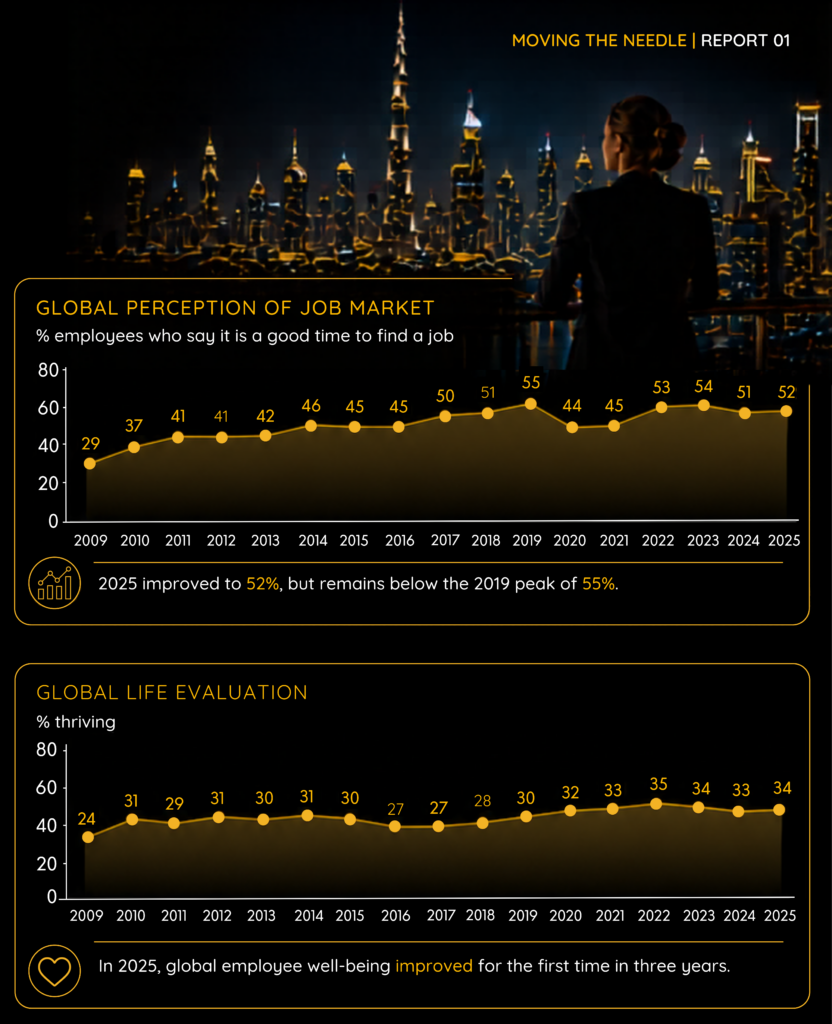
Job-market optimism and life evaluation improved in 2025 globally, but engagement kept falling,
Global employee well-being improved in 2025 for the first time in three years. Perceptions of the job market also improved, though they remain below the 2019 peak.
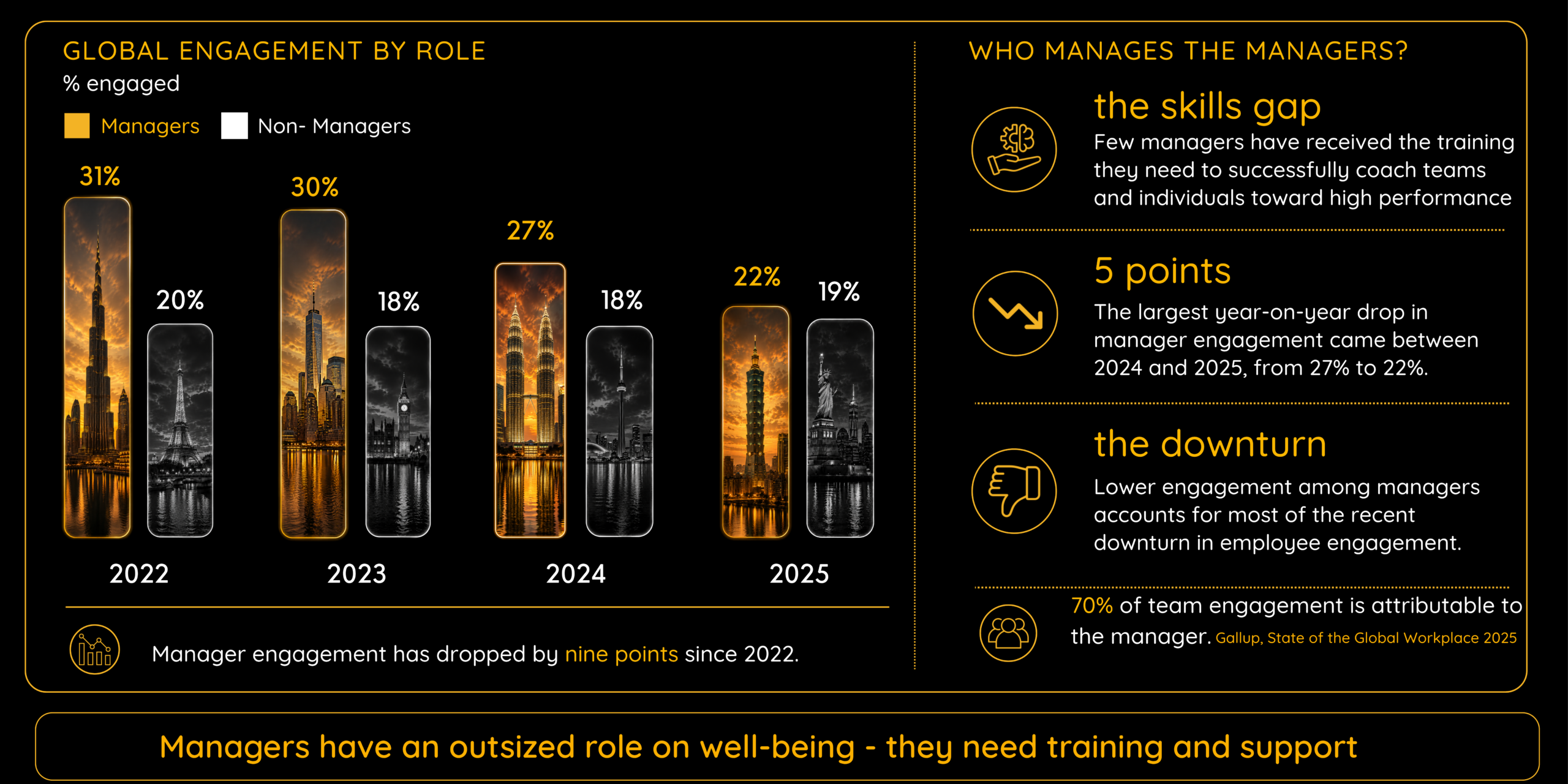
But engagement tells a more difficult story: global employee engagement declined for a second consecutive year, falling to its lowest level since 2020.
The Gallup State of the Global Workplace 2026 revealed a worrying trend for those responsible for teams – managers.
It might be tough at the top, but it’s rough in the middle.
regional outlook
Regional strain.
GCC resilience.
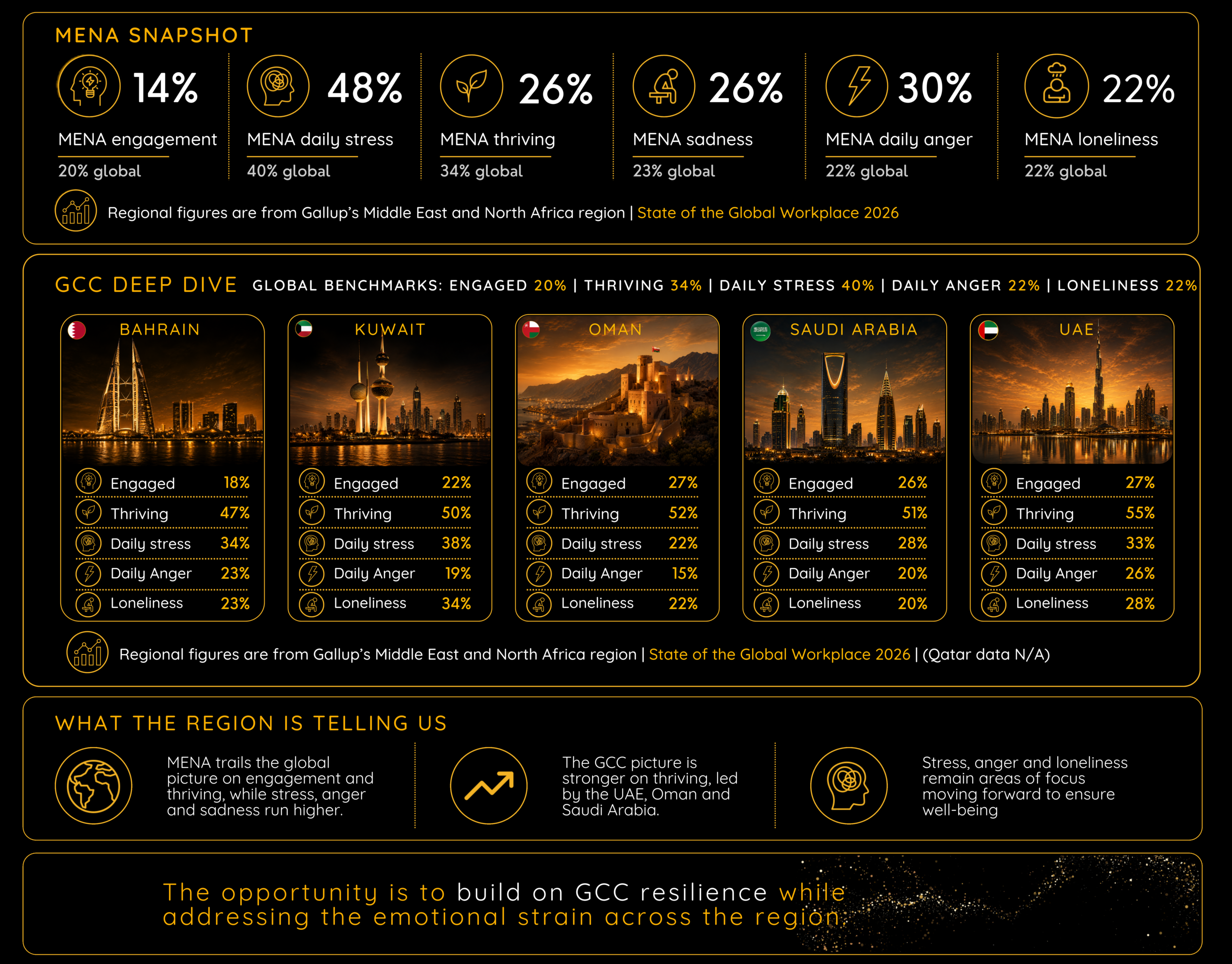
Across MENA, daily stress, anger and sadness runs higher than the global average. In the GCC, more are thriving – but emotional pressure remains.
MENA’s workplace picture remains strained: engagement is low, life evaluation trails the global picture, and daily stress, anger and sadness run higher.
However, the GCC shows a stronger regional outlook.
The UAE leads on thriving, Oman is lowest on daily stress and anger, and Saudi Arabia is lowest on daily loneliness.
But two things can be true at the same time…

a regional paradox
High vitality.
High pressure.
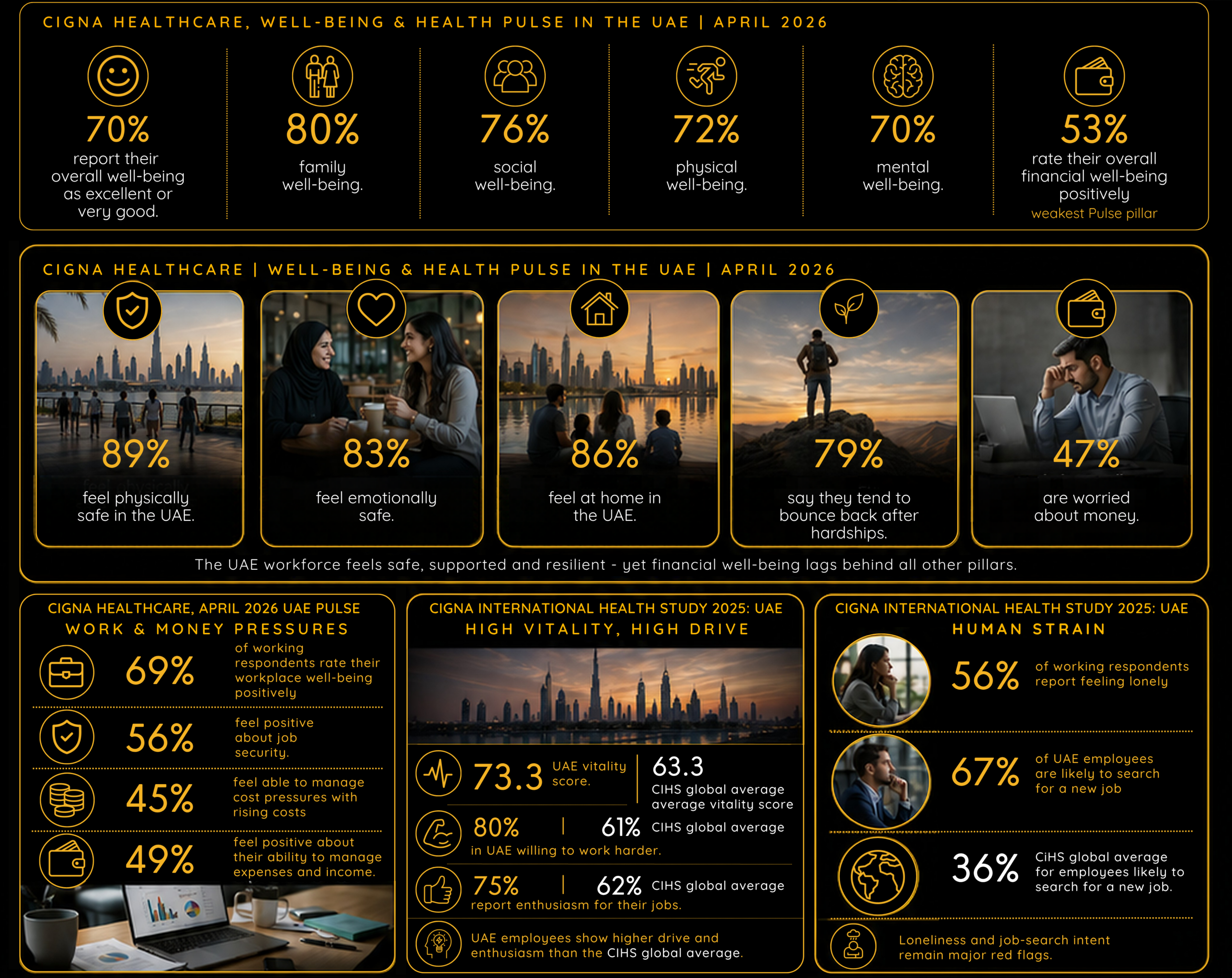
The UAE is a high-vitality, high ambition, highly-resilient market.
But, it is also high pressure.
The UAE shows strong foundations of safety, connection, resilience and work ambition. People feel physically and emotionally safe, connected at home, and willing to work hard.
But beneath the momentum lies a quieter strain: financial pressure, loneliness, job-security pressure and job mobility.
The data reveals a clear paradox:
Strong foundations, strong pressures.

Our full playbook is available to mentl community members, click the cover shot to sign up for free to receive your copy.

inequity of experience
One workforce.
Different realities.
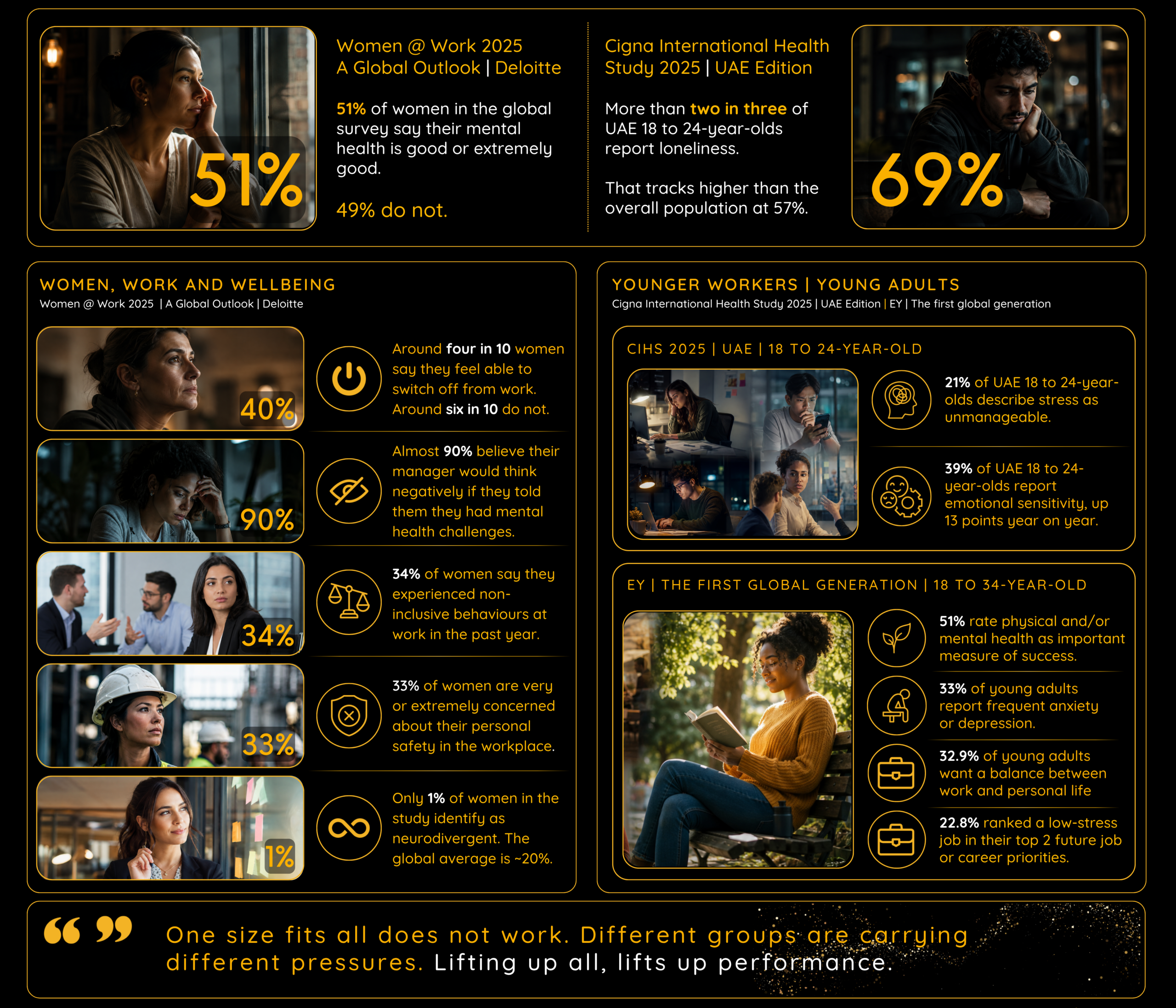
The same workplace can feel very different depending on who is experiencing it. For women, mental health, switching off, safety and inclusion remain live workplace issues. For younger people, the evidence splits into two distinct stories: high loneliness and emotional pressure.
The lesson is clear: inclusive well-being strategy must be specific, not generic.
Well-being is not experienced equally.
Gender, age, life stage and workplace dynamics shape how people feel, and how pressure shows up.
the economic case
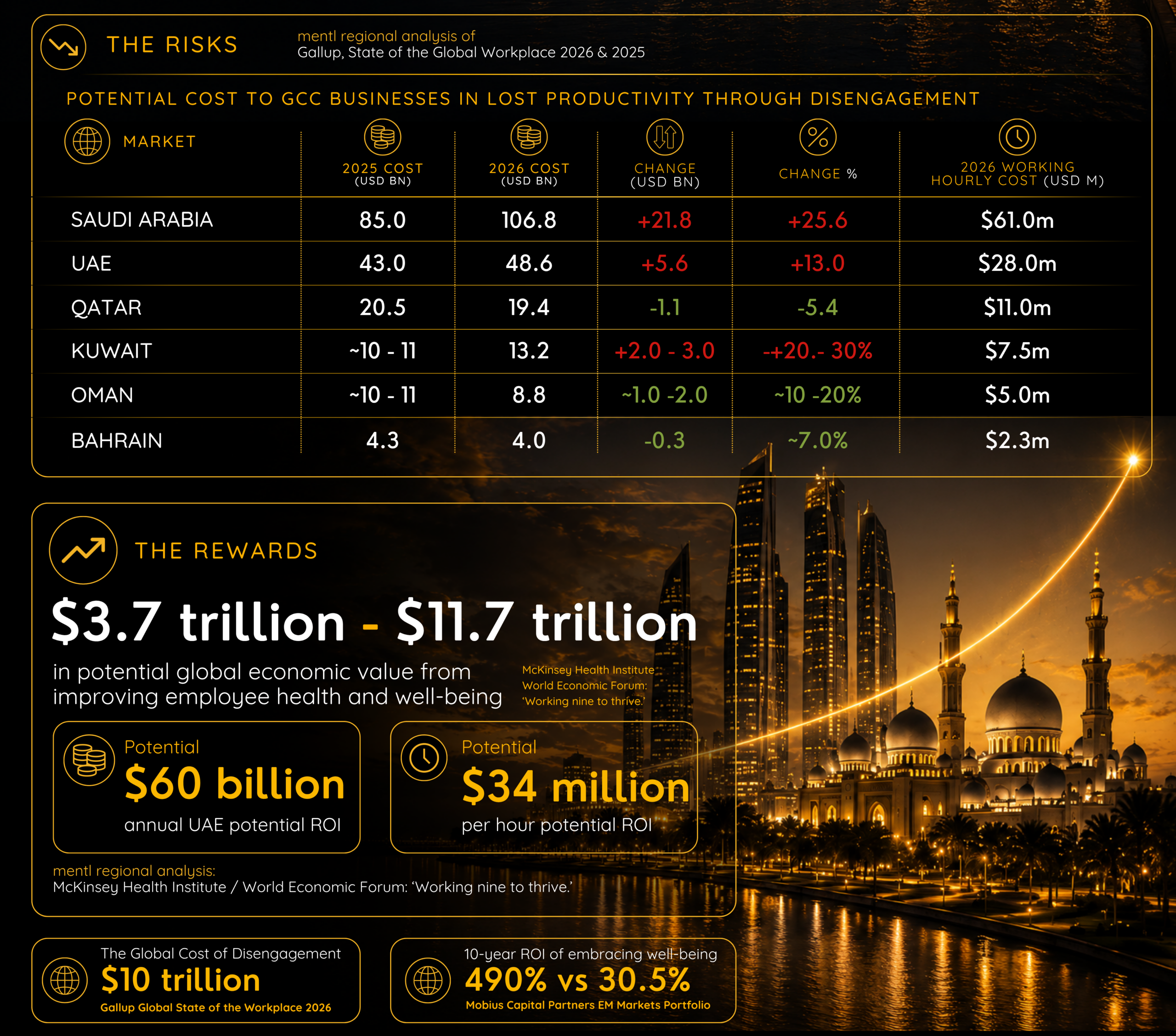
The Risks Are Big.
The Rewards Are Bigger.
Mental health isn’t just a human issue. It’s an economic one.
When people struggle, productivity drops, turnover rises, and organisations absorb the cost.
But when organisations invest in well-being, they unlock performance, innovation and long-term value.
The cost of inaction is real. But the upside of action is bigger.
Invest now, or pay later….

POLICY IN MOTION
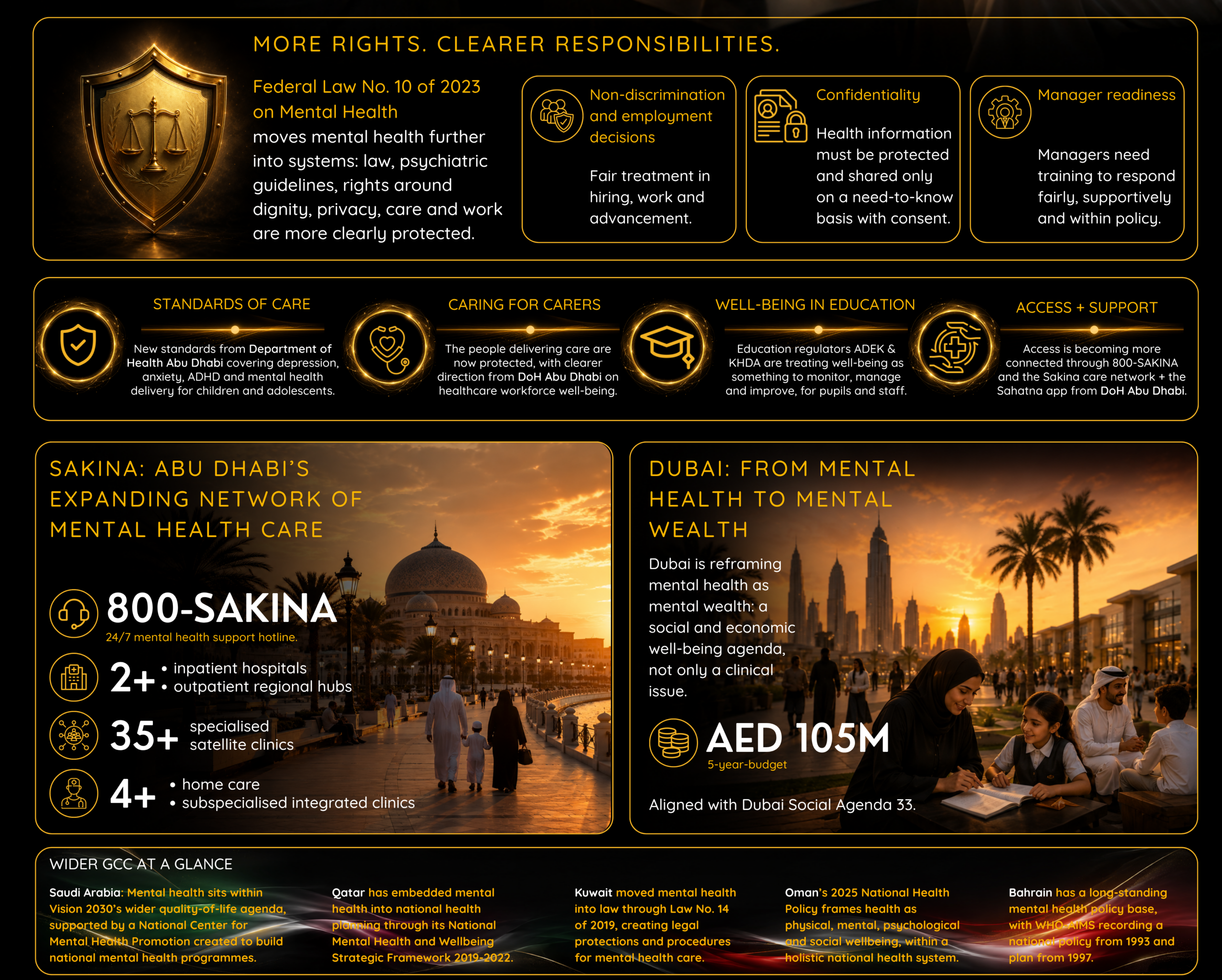
New Rights.
New Rules.
This is where policy becomes personal. For people living with mental health challenges, clearer rights and better access can mean more dignity, more protection and less fear of speaking up.
For employers it means fairer decisions, stronger confidentiality, better trained managers and trusted routes into support.
The direction of travel is clear.
Across the UAE, mental health is moving from awareness to systems: law, clinical standards, education policy, digital access, and public support.

REAL-WORLD PRACTICE
From Intention.
To impact.
The public framework is taking shape. Now organisations need to turn commitment into systems people can trust.
The case for action is clear. The question is what action looks like when it moves beyond statements of support and becomes part of how an organisation works.
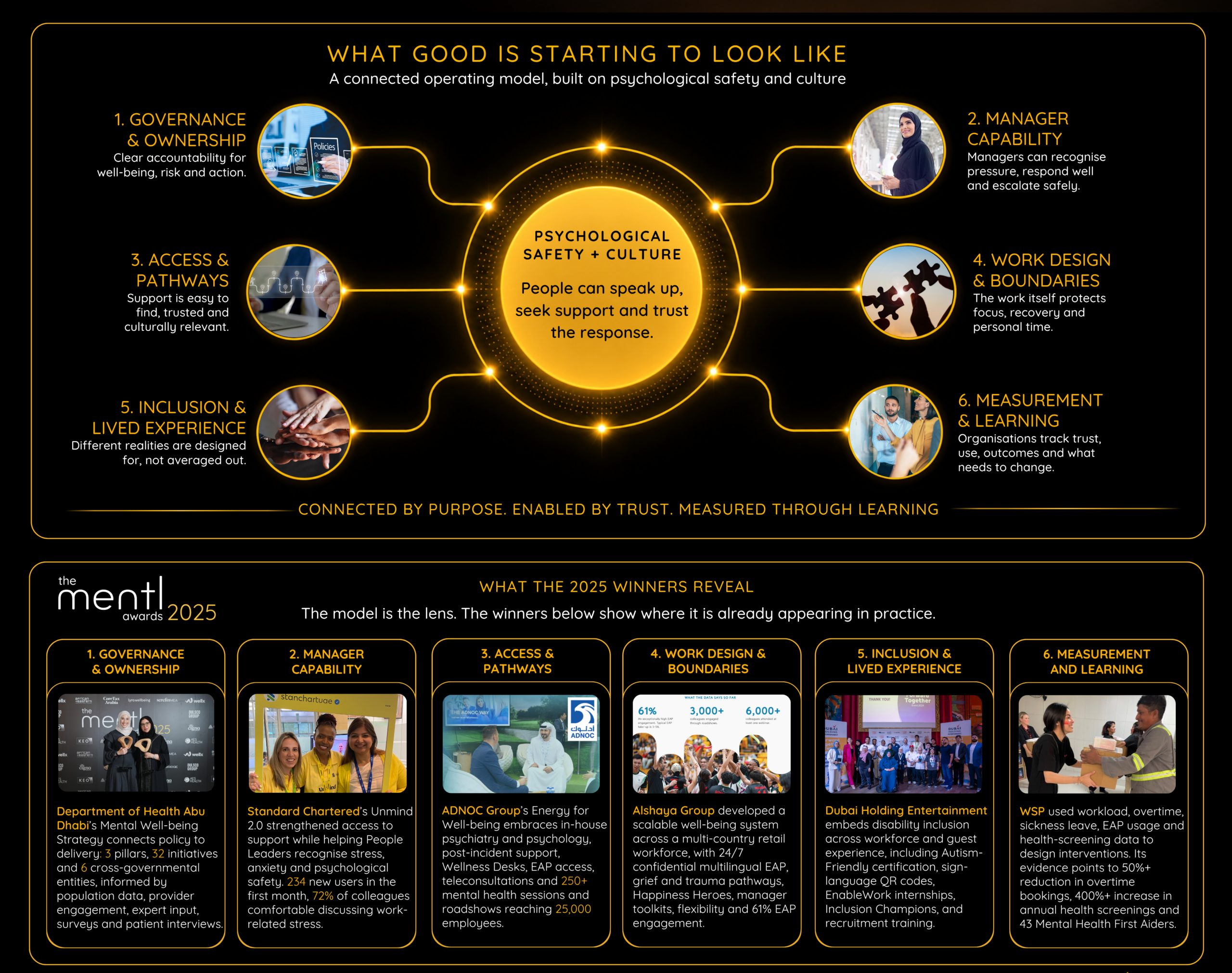
That is where the mentl awards come in. Each year, we surface the people and organisations willing to do more than talk about mental health. The winners are not here as a roll-call, they create real world impact.
Their work shows how intent becomes structure, support, access, inclusion and measurable change.

Join our community and download your copy of our Moving the Needle playbook
This first annual edition of Moving the Needle brings that work together: data-rich deep dives into nine industry leaders, a wider tactics deck spanning multiple sectors, and more than 60 real-world case studies and examples from the GCC region.
Why ask “How do organisations turn pressure into action?”
We unpack three years of data from the mentl awards entrants, and ask practical questions: what was the pressure point, what did the organisation build, how was it implemented, what worked, and what can others adapt?
Click the image to join our community and download your copy.