
#BeTheChange at Work | Reducing Stress, Burnout and Rebuilding Engagement
For many teams, stress is no longer a spike. It is something that sits in the background of everyday work.
It shows up in different ways. Slower thinking, reduced focus, more tension in conversations, and a sense that work takes more effort than it should.
In this episode of our Workplace Harmonics series, supported by Viatris and AmCham Abu Dhabi, mentl founder Scott Armstrong is joined by Dr Valentina Faia, Specialist Psychiatrist at the BioPsychoSocial Clinic, and Andy Fieldhouse, Team Relationship Coach at The Team Space, to explore the real drivers of stress, burnout, and disengagement in today’s workplace.
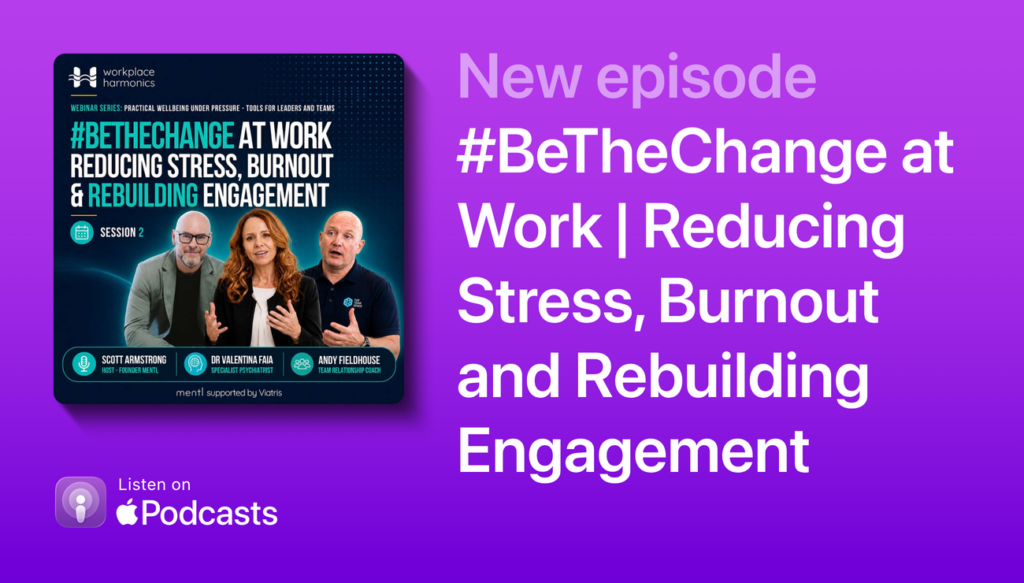
Together they unpack how stress shifts from a short-term response into a chronic condition, how team dynamics influence how people cope, and why clarity, communication, and trust are critical to maintaining performance.
Key Highlights:
• How chronic stress changes how people think and perform
• Burnout is not just about working too hard
• Team culture determines performance under pressure
• Clarity and communication are critical psychological buffers
If work feels harder than it should right now, this conversation will help you understand why, and more importantly, what can be done about it.
Whether you lead a team or are part of one, this session gives you practical ways to reduce friction, improve focus, and create a more sustainable way of working.
This session is part of our Workplace Harmonics series focused on practical well-being tools for leaders and teams navigating pressure and uncertainty at work.
Chapters
00:00 Introduction and context for Stress Awareness Month
02:00 The cost of disengagement and why it matters now
03:30 What chronic stress does to the brain and body
08:00 Early warning signs of stress and burnout
10:45 How stress shows up in team dynamics
13:40 The role of leadership behaviour and trust
18:00 Why burnout is about more than workload
20:00 Poll: What is driving stress in teams right now
23:30 Communication, clarity and cognitive overload
25:50 How to improve meetings and reduce friction
29:00 Psychological safety and team performance
33:30 Poll: What changes teams are willing to make
36:30 Practical tools for leaders and teams
50:50 Supporting people through uncertainty
53:10 Actions leaders can take immediately
55:55 Final reflections and key takeaways